
The "biography" of a thing teaches us how humankind has shaped its history -- and how it has shaped our history. Explore these non-fiction books below.
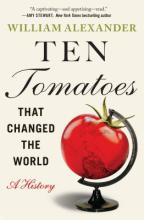
The tomato gets no respect. Never has. Lost in the dustbin of history for centuries, accused of being vile and poisonous, subjected to being picked hard-green and gassed, even used as a projectile, the poor tomato has become the avatar for our disaffection with industrial foods - while becoming the most popular vegetable in America (and, in fact, the world). Each summer, tomato festivals crop up across the country; the Heinz ketchup bottle, instantly recognizable, has earned a spot in the Smithsonian; and now the tomato is redefining the very nature of farming, moving from fields into climate-controlled mega-greenhouses. Supported by meticulous research and told in a lively, accessible voice, Ten Tomatoes That Changed the World seamlessly weaves travel, history, humor, and a little adventure (and misadventure) to follow the tomato's trail through history. A fascinating story complete with heroes, con artists, conquistadors, and-no surprise-the Mafia, this book is a mouth-watering, informative, and entertaining guide to the food that has captured our hearts for generations.
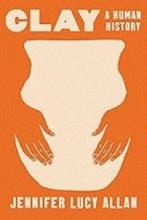
A human history told through clay--and how it has shaped us from ancient times to the present day. This book is a love letter to clay, the material that is at the beginning, middle and end of all of our lives; that contains within it the eternal, the elemental, and the everyday. People have been taking handfuls of earth and forming them into their own image since human history began. Human forms are found everywhere there was a ceramic tradition, and there is a ceramic tradition everywhere there was human activity. The clay these figures are made from was formed in deep geological time. It is the material that God, cast as the potter, uses to form Adam in Genesis. Tomb paintings in Egypt show the god Khnum at a potter's wheel, throwing a human. Humans first recorded our own history on clay tablets, the shape of the characters influenced by the clay itself. The first love poem was inscribed in a clay tablet, from a Sumerian bride to her king more than 4,000 years ago. Born out of a desire to know and understand the mysteries of this material, the spiritual and practical applications of clay in both its micro and macro histories, A Human History is a book of wonder and insight, a hybrid of archaeology, history and lived experience as an amateur potter.
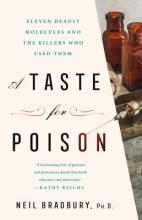
A brilliant blend of science and crime, A TASTE FOR POISON reveals how eleven notorious poisons affect the body--through the murders in which they were used. As any reader of murder mysteries can tell you, poison is one of the most enduring-and popular-weapons of choice for a scheming murderer. It can be slipped into a drink, smeared onto the tip of an arrow or the handle of a door, even filtered through the air we breathe. But how exactly do these poisons work to break our bodies down, and what can we learn from the damage they inflict? In a fascinating blend of popular science, medical history, and true crime, Dr. Neil Bradbury explores this most morbidly captivating method of murder from a cellular level. Alongside real-life accounts of murderers and their crimes-some notorious, some forgotten, some still unsolved-are the equally compelling stories of the poisons involved: eleven molecules of death that work their way through the human body and, paradoxically, illuminate the way in which our bodies function. Drawn from historical records and current news headlines, A Taste for Poison weaves together the tales of spurned lovers, shady scientists, medical professionals and political assassins to show how the precise systems of the body can be impaired to lethal effect through the use of poison. From the deadly origins of the gin & tonic cocktail to the arsenic-laced wallpaper in Napoleon's bedroom, A Taste for Poison leads readers on a riveting tour of the intricate, complex systems that keep us alive-or don't.
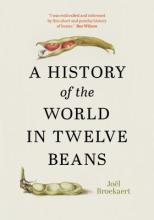
In A History of the World in Twelve Beans, food writer and history buff Joël Broekaert reveals how beans have profoundly shaped human history, culture, and society, through millennia and across continents. Beans have been long dismissed as the “common person’s food”—a cheap and nutritious form of protein that replaces expensive meat—and are often the butt of jokes about flatulence (enough to make some Greek philosophers forbid their followers from eating them). But beans, as Broekaert shows, are surprisingly mighty. Fava beans helped pull medieval Europe out of the Dark Ages and fuel a population boom. While soy powered the Chinese empire, thanks to the culinary innovations that turned a nearly indigestible bean into delicious miso, soy sauce, and tofu.
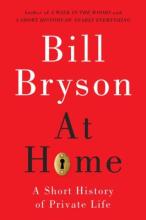
Bill Bryson and his family live in a Victorian parsonage in a part of England where nothing of any great significance has happened since the Romans decamped. Yet one day, he began to consider how very little he knew about the ordinary things of life as he found it in that comfortable home. To remedy this, he formed the idea of journeying about his house from room to room to “write a history of the world without leaving home.” The bathroom provides the occasion for a history of hygiene; the bedroom, sex, death, and sleep; the kitchen, nutrition and the spice trade; and so on, as Bryson shows how each has figured in the evolution of private life. Whatever happens in the world, he demonstrates, ends up in our house, in the paint and the pipes and the pillows and every item of furniture.
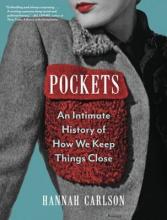
A social and design history of the sewn-in pocket, from the mid-1500s up to today, that uncovers what pockets reveal about us, our place in society, and how we move through the world.
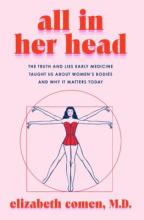
In the spirit of Sid Mukherjee's Emperor of All Maladies, a medical history that is both a collective narrative of women's bodies and a call to action for a new conversation around personal health, self-improvement, and the future of healthcare for everyone.
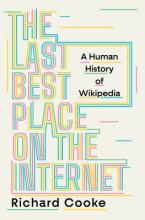
One of the keystone inventions of the twenty-first century, Wikipedia is the largest repository of human knowledge ever made, with editions in 343 languages, read by millions of people every day. Yet, its rightful status as a "digital wonder of the world" is coupled with an odd complacency. We all use Wikipedia (often without realizing it) but seldom think about what it is and where it came from. In this entertaining book, Richard Cooke offers a fresh and definitive account of this era-defining phenomenon. The Last Best Place on the Internet reveals the personality clashes, philosophical disputes, private obsessions, pioneering innovations, and unexpected ideas behind Wikipedia's fabled creation, extraordinary growth, and unparalleled success. Cooke examines the profound effect of an "encyclopedia anyone can edit" on politics, business, literature, and society at large. He explores the site's shifting role in establishing fact amid deep uncertainty about truth and authority, the often hilariously fierce debates between "Inclusionists" and "Deletionists" about what matters, and the great perils Wikipedia faces today from bots, political division, and artificial intelligence. Meticulously researched and eye-opening, The Last Best Place on the Internet is a fascinating journey into the hidden world of one of the most vital--and most endangered--cultural achievements of our time.
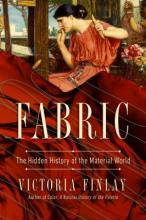
From our earliest ancestors to babies born today, fabric is a necessary part of our everyday lives, but it's also an opportunity for creativity, symbolism, culture and connection. Traveling across the world and bringing history to life, bestselling author Victoria Finlay investigates how and why people have made and used cloth. A century ago in Wales, women would sew their own funeral clothes over tea with friends. In Papua New Guinea, bark is stripped from trees and beaten into cloth. Harris Tweed has a particular smell, while Guatemalan weavers use dazzling colors. Uncovering the stories of the fabrics people wear and use from sacking to silk, Fabric combines science, history, tradition and art in a captivating exploration of how we live, work, craft and care.
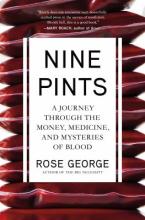
Blood carries life, yet the sight of it makes people faint. It is a waste product and a commodity pricier than oil. It can save lives and transmit deadly infections. Each one of us has roughly nine pints of it, yet many don’t even know their own blood type. And for all its ubiquity, the few tablespoons of blood discharged by 800 million women are still regarded as taboo; menstruation is perhaps the single most demonized biological event. Rose George, author of The Big Necessity, is renowned for her intrepid work on topics that are invisible but vitally important. In Nine Pints, she takes us from ancient practices of bloodletting to modern “hemovigilance” teams that track blood-borne diseases. She introduces Janet Vaughan, who set up the world’s first system of mass blood donation during the Blitz, and Arunachalam Muruganantham, known as “Menstrual Man” for his work on sanitary pads for developing countries. She probes the lucrative business of plasma transfusions, in which the U.S. is known as the “OPEC of plasma.” And she looks to the future, as researchers seek to bring synthetic blood to a hospital near you.
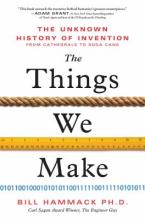
In this book, Bill Hammack, better known as The Engineer Guy, takes us on a whirlwind tour of how humans built the world we know today. From the grand stone arches of medieval cathedrals to the mundane modern soda can, Hammack explains the golden rule of thumb that underlies every new building technique, every technological advancement, and every creative solution that leads us one step closer to a better, more functional world. Perfect for readers of Adam Grant and Jared Diamond, this fascinating examination of the method that keeps pushing humanity forward is a spotlight on the achievements of the past and a celebration of the potential of our future.
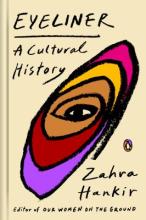
From the acclaimed editor of Our Women on the Ground comes a dazzling exploration of the intersections of beauty and power around the globe, told through the lens of an iconic cosmetic From the distant past to the present, with fingers and felt-tipped pens, metallic powders and gel pots, humans have been drawn to lining their eyes. The aesthetic trademark of figures ranging from Nefertiti to Amy Winehouse, eyeliner is one of our most enduring cosmetic tools; ancient royals and Gen Z beauty influencers alike would attest to its uniquely transformative power. It is undeniably fun, yet it is also far from frivolous. Seen through Zahra Hankir's (kohl-lined) eyes, this ubiquitous but seldom-examined product becomes a portal to history, proof both of the stunning variety among cultures across time and space and of our shared humanity. Through intimate reporting and conversations -- with nomads in Chad, geishas in Japan, dancers in India, drag queens in New York, and more -- Eyeliner embraces the rich history and significance of its namesake, especially among communities of color. What emerges is an unexpectedly moving portrait of a tool that, in various corners of the globe, can signal religious devotion, attract potential partners, ward off evil forces, shield eyes from the sun, transform faces into fantasies, and communicate volumes without saying a word. Delightful, surprising, and utterly absorbing, Eyeliner is a fascinating tour through streets, stages, and bedrooms around the world, and a thought-provoking reclamation of a key piece of our collective history.
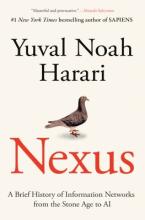
For the last 100,000 years, we Sapiens have accumulated enormous power. But despite all our discoveries, inventions, and conquests, we now find ourselves in an existential crisis. The world is on the verge of ecological collapse. Misinformation abounds. And we are rushing headlong into the age of AI-a new information network that threatens to annihilate us. For all that we have accomplished, why are we so self-destructive? Nexus looks through the long lens of human history to consider how the flow of information has shaped us, and our world. Taking us from the Stone Age, through the canonization of the Bible, early modern witch-hunts, Stalinism, Nazism, and the resurgence of populism today, Yuval Noah Harari asks us to consider the complex relationship between information and truth, bureaucracy and mythology, wisdom and power. He explores how different societies and political systems throughout history have wielded information to achieve their goals, for good and ill. And he addresses the urgent choices we face as non-human intelligence threatens our very existence.
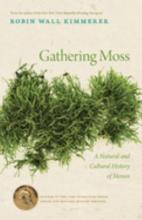
Living at the limits of our ordinary perception, mosses are a common but largely unnoticed element of the natural world. Gathering Moss is a beautifully written mix of science and personal reflection that invites readers to explore and learn from the elegantly simple lives of mosses. Robin Wall Kimmerer's book is not an identification guide, nor is it a scientific treatise. Rather, it is a series of linked personal essays that will lead general readers and scientists alike to an understanding of how mosses live and how their lives are intertwined with the lives of countless other beings, from salmon and hummingbirds to redwoods and rednecks. Kimmerer clearly and artfully explains the biology of mosses, while at the same time reflecting on what these fascinating organisms have to teach us.

In the tradition of Fast Food Nation and The Omnivore's Dilemma, an extraordinary investigation into the human lives at the heart of the American grocery store What does it take to run the American supermarket? How do products get to shelves? Who sets the price? And who suffers the consequences of increased convenience end efficiency? In this alarming exposé, author Benjamin Lorr pulls back the curtain on this highly secretive industry. Combining deep sourcing, immersive reporting, and compulsively readable prose, Lorr leads a wild investigation in which we learn: The secrets of Trader Joe's success from Trader Joe himself Why truckers call their job "sharecropping on wheels" What it takes for a product to earn certification labels like "organic" and "fair trade" The struggles entrepreneurs face as they fight for shelf space, including essential tips, tricks, and traps for any new food business The truth behind the alarming slave trade in the shrimp industry The result is a page-turning portrait of an industry in flux, filled with the passion, ingenuity, and exploitation required to make this everyday miracle continue to function. The product of five years of research and hundreds of interviews across every level of the industry, The Secret Life of Groceries delivers powerful social commentary on the inherently American quest for more and the social costs therein.
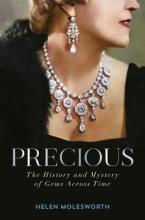
Helen Molesworth has been captivated by precious stones since early childhood but she struggled to join the gemstone industry, having no connections to the few family-run companies that have dominated the field for centuries. She persevered, and more than two decades later, Molesworth is now an international authority hired to appraise the extraordinary jewelry of such clients as the British royal family. Precious is packed with inside stories about fabulous jewels associated with generations of celebrities, from Cleopatra (emerald) to Catherine, Princess of Wales (sapphire); from Marilyn Monroe (pearl) to Beyoncé (garnet); from Jackie O (pearl) to Lady Gaga (diamond); and from Marie Antoinette (pearl) to Elizabeth Taylor (pearl, ruby, and emerald)! As Molesworth tells it, the history of gemstones is the history of humanity. And so she journeys the world, navigating African diamond mines, Colombian emerald mines, and the sapphire-rich rivers of Sri Lanka to study gems at their source. She has selected ten of nature’s most dazzling gems, tracing their discovery to when these cut-and-polished masterpieces first adorned empresses and kings.
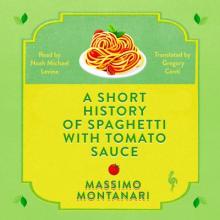
Is it possible to identify a starting point in history from which everything else unfolds--a single moment that can explain the present and reveal the essence of our identities? According to Massimo Montanari, this is just a myth: by themselves, origins explain very little and historical phenomena can only be understood dynamically--by looking at how events and identities develop and change as a result of encounters and combinations that are often unexpected. As Montanari shows in this lively, brilliant, and surprising essay, all you need to debunk the "origins myth" is a plate of spaghetti. By tracing the history of the one of Italy's "national dishes"--from Asia to America, from Africa to Europe; from the beginning of agriculture to the Middle Ages and up to the 20th century--he shows that in order to understand who we are (our identity) we almost always need to look beyond ourselves to other cultures, peoples, and traditions.
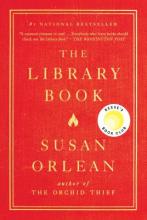
Susan Orlean reopens the unsolved mystery of the most catastrophic library fire in American history, and delivers a dazzling love letter to a beloved institution--our libraries.
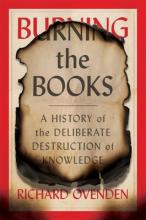
Richard Ovenden describes the deliberate destruction of knowledge held in libraries and archives from ancient Alexandria to contemporary Sarajevo, from smashed Assyrian tablets in Iraq to the destroyed immigration documents of the United Kingdom’s Windrush generation. He examines both the motivations for these acts—political, religious, and cultural—and the broader themes that shape this history. He also looks at attempts to prevent and mitigate attacks on knowledge, exploring the efforts of librarians and archivists to preserve information, often risking their own lives in the process. More than simply repositories for knowledge, libraries and archives inspire and inform citizens. In preserving notions of statehood recorded in such historical documents as the Declaration of Independence, libraries support the state itself. By preserving records of citizenship and records of the rights of citizens as enshrined in legal documents such as the Magna Carta and the decisions of the United States Supreme Court, they support the rule of law. In Burning the Books, Ovenden takes a polemical stance on the social and political importance of the conservation and protection of knowledge, challenging governments in particular, but also society as a whole, to improve public policy and funding for these essential institutions.
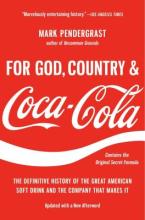
Mark Pendergrast recounts more than a hundred years of the Coca-Cola Company with verve and a historian's eye for the telling detail, aligning Coke's success with the emergence of that other great American innovation-modern capitalism. With vivid portraits of the colourful cast of entrepreneurs, hustlers, swindlers, ad men, and con men who have made Coca-Cola the most recognized trademark in the world-and with a new afterword bringing the story up to today-this is business history at its best: authoritative, enlightening, and fun. Like Coke itself, For God, Country and Coca-Cola is 'The Real Thing.
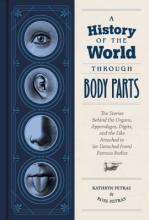
Explore the history your textbook left out through the eyes (mouth, ears, and spleen) of the world's most iconic players in A History of the World Through Body Parts, a curious collection of unbelievable anecdotes all about the body. In this book, you'll learn all about: The Mayan history of bloodletting and Lady Xoc's pierced tongue The double decapitations that altered the course of the English monarchy Global feminism and the unbinding of Chinese revolutionary Qiu Jin's feet Lenin's postmortem pickled skin and its influence on the Soviet Union Drawing from various countries and cultures, the stories in this book explore the unique body parts of infamous icons and how they shaped the world around them. From Lord Byron's foot to Saint Cuthburt's posthumous manicures, this book's new way of archiving the past will shake you to your core - literally.
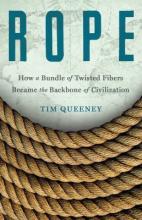
A unique and compelling adventure through the history of rope and its impact on civilization, in the vein of single-subject bestsellers like Salt and Cod Tim Queeney is a sailor who knows more about rope and its importance to humankind than most. In Rope, Queeney takes readers on a ride through the history of rope and the way it weaves itself through the story of civilization. From Magellan's world-circling ships, to the 15th-century fleet of Admiral Zheng He, to Polynesian multihulls with crab claw sails, he shows how without rope, none of their adventurous voyages and discoveries would have been possible. Time traveling, he describes the building of the pyramids, the Roman Coliseum, Hagia Sofia, Notre Dame, the Sultan Hasan Mosque, the Brooklyn Bridge, and countless other constructions that would not have been possible without rope. Not content to just look at rope's past, Queeney looks at its present and possible future and how the re-invention of rope with synthetic fibers will likely provide the strength for cables to support elevators into space. Making the story of rope real for readers, Queeney tells remarkable nautical stories of his own reliance on rope at sea. Rope is history, adventure, and the story of one of the world's most common tools that has made it possible for humans to advance throughout the centuries.
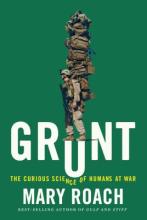
Mary Roach explores the science of keeping human beings intact, awake, sane, uninfected, and uninfested in the bizarre and extreme circumstances of war. Grunt tackles the science behind some of a soldier's most challenging adversaries―panic, exhaustion, heat, noise―and introduces us to the scientists who seek to conquer them. Mary Roach dodges hostile fire with the U.S. Marine Corps Paintball Team as part of a study on hearing loss and survivability in combat. She visits the fashion design studio of U.S. Army Natick Labs and learns why a zipper is a problem for a sniper. She visits a repurposed movie studio where amputee actors help prepare Marine Corps medics for the shock and gore of combat wounds. At Camp Lemmonier, Djibouti, in east Africa, we learn how diarrhea can be a threat to national security. Roach samples caffeinated meat, sniffs an archival sample of a World War II stink bomb, and stays up all night with the crew tending the missiles on the nuclear submarine USS Tennessee. She answers questions not found in any other book on the military: Why is DARPA interested in ducks? How is a wedding gown like a bomb suit? Why are shrimp more dangerous to sailors than sharks? Take a tour of duty with Roach, and you’ll never see our nation’s defenders in the same way again. 15 illustrations
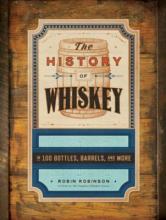
In this beautiful volume, award-winning spirits expert Robin Robinson skillfully chronicles the development of whiskey, highlighting a hundred exceptional milestones in its history. The journey begins in antiquity with the simple covered pot and alembic. In the Middle Ages, monks distilled spirits to make medicine. After King Henry VIII dissolved the monasteries, whiskey distillation shifted from clergy to farmers. Over the centuries, taxes and prohibition took their toll, even sparking the Whiskey Rebellion in the early years of American independence. In the 1700s and 1800s, as the British Empire colonized the globe, waves of European emigrants brought whiskey to Canada, Australia, India, Japan, and elsewhere. Surveying the evolution of Scotch, the birth of bourbon and rye, and the importance of family ties, quality control, corporatization, and marketing, this comprehensive compendium details the global impact of the beverage conglomerates, the world's most expensive Scotch, the 2011 curveball of aging bourbon in ex-port barrels, and more. Richly illustrated with bottle shots and captivating archival imagery, it makes a splendid, inviting tribute to your favorite dram.

The author offers a look at depression in which he draws on his own battle with the illness and interviews with fellow sufferers, researchers, doctors, and others to assess the complexities of the disease, its causes and symptoms, and available therapies. This book examines depression in personal, cultural, and scientific terms. He confronts the challenge of defining the illness and describes the vast range of available medications, the efficacy of alternative treatments, and the impact the malady has on various demographic populations, around the world and throughout history. He also explores the thorny patch of moral and ethical questions posed by emerging biological explanations for mental illness. He takes readers on a journey into the most pervasive of family secrets and contributes to our understanding not only of mental illness but also of the human condition.
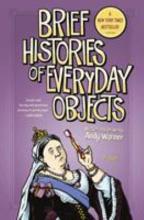
A collection of illustrated histories behind some of life's most common and underappreciated objects--from the paper clip and toothbrush to the sports bra and roller skates.
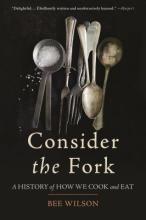
In Consider the Fork, award-winning food writer Bee Wilson provides a wonderful and witty tour of the evolution of cooking around the world, revealing the hidden history of everyday objects we often take for granted. Knives - perhaps our most important gastronomic tool - predate the discovery of fire, whereas the fork endured centuries of ridicule before gaining widespread acceptance; pots and pans have been around for millennia, while plates are a relatively recent invention. Many once-new technologies have become essential elements of any well-stocked kitchen - mortars and pestles, serrated knives, stainless steel pots, refrigerators. Others have proved only passing fancies, or were supplanted by better technologies; one would be hard pressed now to find a water-powered egg whisk, a magnet-operated spit roaster, a cider owl, or a turnspit dog. Although many tools have disappeared from the modern kitchen, they have left us with traditions, tastes, and even physical characteristics that we would never have possessed otherwise.
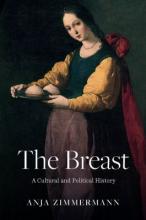
Zimmermann takes the reader on an extended tour of how the breast and its symbolism are politically constructed. She examines this ambiguous and versatile body part from various perspectives but always with a political question in mind. This is a book about art and pornography, fashion and gender norms, the ideal of motherhood and heteronormativity, body positivity and self-determination, sexism and protest. She shows that the dialectic between revealing and concealing, visibility and invisibility, played out discursively in different fields, is a key to understanding the social, cultural and political significance of the breast. Her book delves into the past, seeking to explain the origins of a conflict that has surfaced again and again in different times and places and is still with us today.