
From political propaganda to psychedelic healing, unseen forces shape us every day. Under the Influence explores persuasion and power in two radically different contexts. When are we choosing—and when are we being shaped?
About Curiosity Collective
Step beyond the ordinary with Curiosity Collective, where adults gather for thoughtful conversations in venues across Denver—from bookstores and cafés to bars and cultural spaces. Each event brings together speakers from very different backgrounds to explore a single theme from unexpected perspectives. Talks are short, engaging, and rooted in personal experience or professional insight. After both talks, the audience submits questions, votes on what to explore further, and joins a collective conversation. See upcoming events in our calendar.
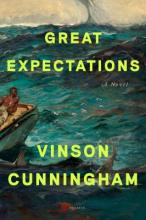
I'd seen the Senator speak a few times before my life got caught up, however distantly, with his, but the first time I can remember paying real attention was when he delivered the speech announcing his run for the Presidency. When David first hears the Senator from Illinois speak, he feels deep ambivalence. Intrigued by the Senator's idealistic rhetoric, David also wonders how he'll balance the fervent belief and inevitable compromises it will take to become the United States's first Black president. Great Expectations is about David's eighteen months working for the Senator's presidential campaign. Along the way David meets a myriad of people who raise a set of questions-questions of history, art, race, religion, and fatherhood, all of which force David to look at his own life anew and come to terms with his identity as a young Black man and father in America.
Addiction has been called a moral failing, a social problem, a spiritual crisis, a behavioral disorder, and a brain disease. It has also been called a class issue, a supply problem, a problem of learning, a memory disorder, and a result of trauma. And some propose that addiction is neither a disease nor a problem, but a transgressive expression of freedom, a maligned sub-culture, a therapeutic relationship. Even the term 'addiction' is open to question. There are few human phenomena so elusive and intractable; after decades of neuroscientific research, we aren't much closer to understanding addiction, nor to addressing it effectively. This profusion of interpretations, meanings, and models reflects a hidden truth about addiction: that it is profusely generative of meaning itself. In this bold reimagining, pioneering psychiatrist Elias Dakwar examines addiction as a sustained creative act--and specifically as a process of personal world-building, complete with its own rituals, systems of value, modes of suffering, and sources of support. In this regard, addiction is something we all do. But there is a crucial difference. In the case of those of us suffering from addiction explicitly, this meaningful world keeps us in clear captivity, worsening the suffering and confusion we hoped it would console. And we remain stuck because we have trouble imagining it differently. Drawing on vivid stories of his own patients, path-breaking research with meditation, psychotherapy, and psychedelics/hallucinogens, and decades of clinical experience, Dakwar explores this captivity at the heart of our addictions, and shows how we might move beyond its bounds to reclaim our freedom. He also relates addiction to our collective self-inflicted crises, from environmental destruction to militarism to social injustice, rendering this often stigmatized condition relevant to all of us. With fluid, rich, and often startling prose, The Captive Imagination offers a novel path for better understanding and overcoming addiction, as well as human suffering more generally.
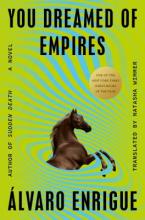
From a visionary Mexican author, a hallucinatory, revelatory, colonial revenge story that reimagines the fall of Tenochtitlan. One morning in 1519, conquistador Hernán Cortés entered the city of Tenochtitlan - today's Mexico City. Later that day, he would meet the emperor Moctezuma in a collision of two worlds, two empires, two languages, two possible futures. Cortés was accompanied by his nine captains, his troops, and his two translators: Friar Aguilar, a taciturn, former slave, and Malinalli, a strategic, former princess. Greeted at a ceremonial welcome meal by the steely princess Atotoxli, sister and wife of Moctezuma, the Spanish nearly bungle their entrance to the city. As they await their meeting with Moctezuma - who is at a political, spiritual, and physical crossroads, and relies on hallucinogens to get himself through the day and in quest for any kind of answer from the gods - the Spanish are ensconced in the labyrinthine palace. Soon, one of Cortés's captains, Jazmín Caldera, overwhelmed by the grandeur of the city, begins to question the ease with which they were welcomed into the city, and wonders at the risks of getting out alive, much less conquering the empire. You Dreamed of Empires brings to life Tenochtitlan at its height, and reimagines its destiny. The incomparably original Alvaro Enrigue sets afire the moment of conquest and turns it into a moment of revolution, a restitutive, fantastical counter-attack, in a novel so electric and so unique that it feels like a dream.

From award-winning novelist Betina González, a dizzying, luminous English-language debut about an American town overrun by a mysterious hallucinogen, forcing its citizens to confront the secrets of their past and rely on unexpected relationships.
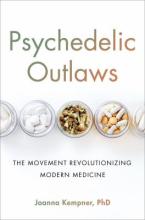
Professor of Sociology Dr. Joanna Kemper follows a group of people united only by debilitating cluster headaches, who, after coming together in the early days of the internet, developed their own medicine from home-grown mushrooms, produced near-clinical grade trials and dosing protocols, and managed to get academics at Harvard and Yale to test their work and results. In the process, this extraordinary story reminiscent of John Carreyrou's Bad Blood and Michael Pollan's How to Change Your Mind explores not only the fascinating history and exploding popularity of mushroom science, but also proves that the United States has set up a regulatory and legal system so repressive that our most innovative therapies for pain are being developed underground by sick people forced to break the law just to find relief, and how, in turn, corporate America, and sometimes devious academics, stand to profit from their transgressions.

After receiving a prestigious writing fellowship in Germany, the narrator of Red Pill arrives in the Berlin suburb of Wannsee and struggles to accomplish anything at all. Instead of working on the book he has proposed to write, he takes long walks and binge-watches "Blue Lives"--a violent cop show that becomes weirdly compelling in its bleak, Darwinian view of life--and soon begins to wonder if his writing has any value at all. Wannsee is a place full of ghosts: across the lake the narrator can see the villa where the Nazis planned the Final Solution, and in his walks he passes the grave of the Romantic writer Heinrich von Kleist, who killed himself after deciding that "no happiness was possible here on earth." When some friends drag him to a party where he meets Anton, the creator of "Blue Lives," the narrator begins to believe that the two of them are involved in a cosmic battle, and that Anton is "red-pilling" his viewers--turning them towards an ugly, alt-rightish worldview--ultimately forcing the narrator to wonder if he is losing his mind.
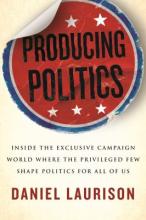
The book describes the reasons the people who run campaigns are unlike the rest of us, and how that matters for our politics.

When Michael Pollan set out to research how LSD and psilocybin (the active ingredient in magic mushrooms) are being used to provide relief to people suffering from difficult-to-treat conditions such as depression, addiction and anxiety, he did not intend to write what is undoubtedly his most personal book. But upon discovering how these remarkable substances are improving the lives not only of the mentally ill but also of healthy people coming to grips with the challenges of everyday life, he decided to explore the landscape of the mind in the first person as well as the third. Thus began a singular adventure into the experience of various altered states of consciousness, along with a dive deep into both the latest brain science and the thriving underground community of psychedelic therapists ...
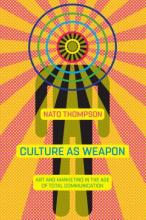
One of the country's leading activist curators explores how corporations and governments have used art and culture to mystify and manipulate us. The production of culture was once the domain of artists, but beginning in the early 1900s, the emerging fields of public relations, advertising and marketing transformed the way the powerful communicate with the rest of us. A century later, the tools are more sophisticated than ever, the onslaught more relentless. In Culture as Weapon, acclaimed curator and critic Nato Thompson reveals how institutions use art and culture to ensure profits and constrain dissent--and shows us that there are alternatives. An eye-opening account of the way advertising, media, and politics work today, Culture as Weapon offers a radically new way of looking at our world.

Mindf*ck goes deep inside Cambridge Analytica's "American operations," which were driven by Steve Bannon's vision to remake America and fueled by mysterious billionaire Robert Mercer's money, as it weaponized and wielded the massive store of data it had harvested on individuals--in excess of 87 million--to disunite the United States and set Americans against each other. Bannon had long sensed that deep within America's soul lurked an explosive tension. Cambridge Analytica had the data to prove it, and in 2016 Bannon had a presidential campaign to use as his proving ground.