
This list is inspired by this year's One Book One Denver selection, The Nickel Boys by Colson Whitehead.
One Book One Denver is an annual reading experience for adults that brings the city together through a shared story. Find out more about One Book One Denver programs, community gatherings, and author talks here!
See this list of books in the library's catalog.
Fiction Books | Nonfiction Books
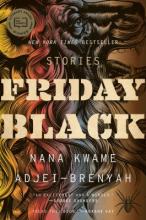
From the start of this extraordinary debut, Nana Kwame Adjei-Brenyah’s writing will grab you, haunt you, enrage and invigorate you. By placing ordinary characters in extraordinary situations, Adjei-Brenyah reveals the violence, injustice, and painful absurdities that Black men and women contend with every day in this country. These stories explore urgent instances of racism and cultural unrest, and the ways we fight for humanity in an unforgiving world. In “The Finkelstein Five,” Adjei-Brenyah reckons with the brutal prejudice of our justice system. In “Zimmer Land,” we see a far-too-easy-to-believe imagining of racism as sport. And “Friday Black” and “How to Sell a Jacket as Told by IceKing” show the horrors of consumerism and the toll it takes on us all.
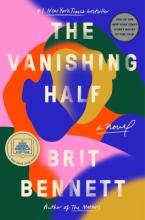
The Vignes twin sisters will always be identical. But after growing up in a small, southern Black community and running away at age sixteen, it's not just the shape of their daily lives that is different as adults, it's everything: their families, their communities, their racial identities. Ten years later, one sister lives with her Black daughter in the same southern town she once tried to escape. The other secretly passes for white. Still, the fates of the twins remain intertwined. What will happen to the next generation, when their own daughters' storylines intersect? Weaving together multiple strands and generations of this family, from the Deep South to California, from the 1950s to the 1990s, Bennett produces a story that is a riveting, emotional family story and a brilliant exploration of the American history of passing.
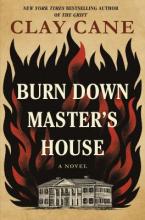
As rebellion sparks across the divided South, small acts of resistance ignite a fierce fight for freedom. At Magnolia Row, Luke—quick-witted and literate—and Henri—a defiant spirit—forge a bond that fuels escape and inspires others, including sharp-eyed Josephine and determined Charity Butler, who wins her freedom in court. But as justice burns brighter, betrayal and cruelty threaten to consume them all.
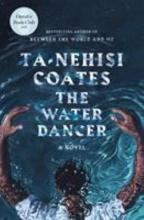
Hiram Walker was born into bondage -- and lost his mother and all memory of her when he was a child -- but he's also gifted with a mysterious power. Hiram almost drowns when he crashes a carriage into a river, but is saved by a force he doesn't understand, a blue light that lifts him up and lands him a mile away. This strange brush with death forces a new urgency on Hiram's private rebellion. Spurred on by his improvised plantation family, Thena, his chosen mother, and Sophia, a young woman fighting her own war even as she and Hiram fall in love, he becomes determined to escape the only home he's ever known. So begins an unexpected journey into the covert war on slavery that takes Hiram from the corrupt grandeur of Virginia's proud plantations to desperate guerrilla cells in the wilderness.
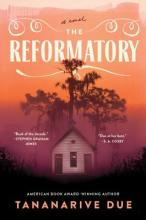
Gracetown, Florida. June, 1950. Twelve-year-old Robbie Stephens, Jr., is sentenced to six months at the Gracetown School for Boys, a reformatory, for kicking the son of the largest landowner in town in defense of his older sister, Gloria. So begins Robbie’s journey further into the terrors of the Jim Crow South and the very real horror of the school they call The Reformatory. The Reformatory is a haunting work of historical fiction written as only author Tananarive Due could, by piecing together the life of the relative her family never spoke of and bringing his tragedy and those of so many others at the infamous Dozier School for Boys to the light.
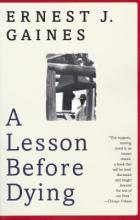
Ernest Gaines brings us a wrenching story of death and identity in a small Cajun Louisiana community in the late 1940s. A young Black man named Jefferson is a reluctant party in a shoot-out in a liquor store in which the three other men involved are killed, including the white store owner. Jefferson, the only survivor, is accused of murder and is condemned to death. Grant Wiggins, who left his small rural Black community to go to university, has returned to the plantation school to teach. Jefferson's godmother and Grant's aunt persuade Grant to impart something of his learning and pride to Jefferson before his death. A Lesson Before Dying tells the story of these two men who, through no choice of their own, come together and form a bond in the realization that sometimes simply choosing to resist the expected is an act of heroism.
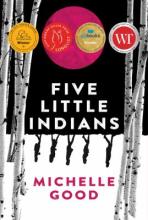
Taken from their families when they are very small and sent to a remote, church-run residential school, Kenny, Lucy, Clara, Howie and Maisie are barely out of childhood when they're finally released after years of detention. Alone and without any support, the teens find their way to the seedy and foreign world of Downtown Eastside Vancouver, where they cling together, striving to find a place of safety and belonging in a world that doesn't want them. The paths of the five friends crisscross over the decades as they struggle to overcome, or at least forget, the trauma they endured during their years at the Mission. With compassion and insight, Five Little Indians chronicles the desperate quest of these residential school survivors to come to terms with their past and, ultimately, find a way forward.
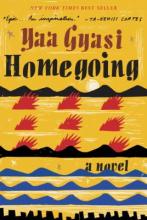
Two half sisters, Effia and Esi, unknown to each other, are born into two different tribal villages in 18th century Ghana. Effia will be married off to an English colonial, and will live in comfort in the sprawling, palatial rooms of Cape Coast Castle. Her sister, Esi, will be imprisoned beneath Effia in the Castle's women's dungeon, and then shipped off on a boat bound for America, where she will be sold into slavery. Stretching from the tribal wars of Ghana to slavery and Civil War in America, from the coal mines in the north to the Great Migration to the streets of 20th century Harlem, Yaa Gyasi's has written a modern masterpiece, a novel that moves through histories and geographies and captures the troubled spirit of our own nation.
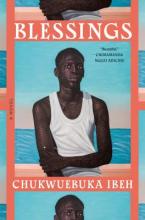
Obiefuna has always been the black sheep of his family. When an intimate connection blossoms between Obiefuna and a boy from a nearby village, happiness is fleeting once his father catches them together and banishes him to boarding school. Obiefuna finds and hides who he truly is as he navigates his new school's strict hierarchy and unpredictable violence. Back home, his mother Uzoamaka must contend with the absence of her beloved son and the hard truths that they've all been hiding from. As Nigeria teeters on the brink of criminalizing same-sex relationships, Obiefuna's life, or the life he wants to live, becomes even further out of reach and more dangerous than ever before. Blessings is an exquisitely moving story that asks how to live freely in a country that forbids one's truest self, and the love that can flourish in spite of it all.
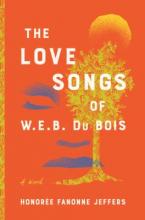
W.E.B. Du Bois, once wrote about the problem of race in America, and what he called “Double Consciousness,” a sensitivity that every African American possesses in order to survive. Since childhood, Ailey Pearl Garfield has understood Du Bois’s words all too well. Bearing the names of two formidable Black Americans—choreographer Alvin Ailey and her great grandmother Pearl, the descendant of enslaved Georgians and tenant farmers—Ailey carries Du Bois’s problem on her shoulders. To come to terms with her own identity, Ailey embarks on a journey through her family’s past, uncovering the shocking tales of generations of ancestors—Indigenous, Black, and white—in the deep South. Ailey must learn to embrace her full heritage, a legacy of oppression and resistance, bondage and independence, cruelty and resilience that is the story of America itself.
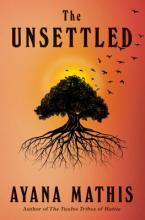
A searing multi-generational novel—set in the 1980s in racially and politically turbulent Philadelphia and in the tiny town of Bonaparte, Alabama—about a mother fighting for her sanity and survival. From the moment Ava Carson and her ten-year-old son, Toussaint, arrive at the Glenn Avenue family shelter in Philadelphia 1985, Ava is already plotting a way out. She is repulsed by the shelter's squalid conditions: their cockroach-infested room, the barely edible food, and the shifty night security guard. She is determined to rescue her son from the perils and indignities of that place, and to save herself from the complicated past that led them there.
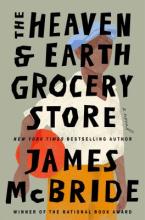
In 1972, when workers in Pottstown, Pennsylvania, were digging the foundations for a new development, the last thing they expected to find was a skeleton at the bottom of a well. Who the skeleton was and how it got there were two of the long-held secrets kept by the residents of Chicken Hill, the dilapidated neighborhood where immigrant Jews and African Americans lived side by side and shared ambitions and sorrows.
The narrator, Azaro, is an abiku, a spirit child, who in the Yoruba tradition of Nigeria exists between life and death. The life he foresees for himself and the tale he tells is full of sadness and tragedy, but inexplicably he is born with a smile on his face. Nearly called back to the land of the dead, he is resurrected. But in their efforts to save their child, Azaro's loving parents are made destitute. The tension between the land of the living, with its violence and political struggles, and the temptations of the carefree kingdom of the spirits propels this latter-day Lazarus's story.
Kit Crockett lives on a farm with her grief-stricken, widowed father, tending the garden, fishing in a local stream, and reading Nancy Drew mysteries from the library bookmobile. One day, Kit discovers a mysterious and beautiful woman has moved in just down the road. Kit and the newcomer, Bella, become friends, and the lonely Kit draws comfort from her. But when a malicious neighbor finds out, Kit suddenly finds herself at the center of a tragic, fatal crime and becomes a ward of the court. Her Cherokee family wants to raise her, but the righteous Christians in town instead send her to a religious boarding school. Kit's heritage is attacked, and she's subjected to religious indoctrination and other forms of abuse. But Kit secretly keeps a journal recounting what she remembers--and revealing just what she has forgotten.
Jojo and his toddler sister, Kayla, live with their grandparents, Mam and Pop, and the occasional presence of their drug-addicted mother, Leonie, on a farm on the Gulf Coast of Mississippi. Leonie is simultaneously tormented and comforted by visions of her dead brother, which only come to her when she's high; Mam is dying of cancer; and quiet, steady Pop tries to run the household and teach Jojo how to be a man. When the white father of Leonie's children is released from prison, she packs her kids and a friend into her car and sets out across the state for Parchman farm, the Mississippi State Penitentiary, on a journey rife with danger and promise. Sing, Unburied, Sing grapples with the ugly truths at the heart of the American story and the power, and limitations, of the bonds of family.
In this incisive critique, former litigator-turned-legal-scholar Michelle Alexander provocatively argues that we have not ended racial caste in America: we have simply redesigned it. Alexander shows that, by targeting Black men and decimating communities of color, the U.S. criminal justice system functions as a contemporary system of racial control, even as it formally adheres to the principle of color blindness. The New Jim Crow challenges the civil rights community--and all of us--to place mass incarceration at the forefront of a new movement for racial justice in America.
Since its original publication in 1955, this first nonfiction collection of essays by James Baldwin remains an American classic. His impassioned essays on life in Harlem, the protest novel, movies, and African Americans abroad are as powerful today as when they were first written.
Black men desperately need care and restoration. But what does that restoration look like when you're a Black man in today's world? How do you take care of your mental health when men who look like you die at the hands of police? How do you find peace and refuge when you're not sure how to keep up with your partner? Or navigate a challenging workplace? In Self-Care for Black Men, you will find practical answers to your questions. This book contains self-care strategies that address some of the most common issues Black men face, such as dealing with racism, navigating prejudice in the workplace, managing romantic relationships, and working through intergenerational trauma. This is your guide to wellness and self-discovery written specifically for Black men.
The modern civil rights movement rapidly came to prominence after World War II, coalescing around the demand to repeal Jim Crow laws and promote a vision of a just, multiracial society. The vast majority of civil rights organizations practiced assertive nonviolence to meet these goals. Nevertheless, opponents often met their activism with violence and intimidation. Like those who marched, protested, and organized for civil rights and social justice, photojournalists put themselves in great danger. Struggle for Justice honors the photographers who were willing to put their privilege on the line to document the discrimination of others and by doing so, help to galvanize public support for the civil rights movement.
In this powerful book, Clarke draws on her professional expertise and her lived experience as a Black woman to share mindfulness exercises, breathwork practices, and meditative tools centered on healing from and surviving racial trauma. Filled with deeply personal stories highlighting the many systemic challenges that people of color face, this mixture of guide and memoir offers thirty-three practical techniques based on the emotions elicited from these experiences. Whether you are coping with police brutality, racial profiling, microaggressions, or even imposter syndrome, Black People Breathe gives you the tools to process these complex feelings physically, mentally, and emotionally.
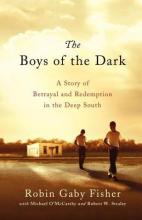
Michael O'McCarthy and Robert W. Straley were teens when they were termed incorrigible youth by authorities and ordered to attend the Florida School for Boys. They discovered in Marianna, the City of Southern Charm, an immaculately groomed campus that looked more like an idyllic university than a reform school. But hidden behind the gates of the Florida School for Boys was a hell unlike any they could have imagined. A series of unlikely events brought O'McCarthy, now a successful rights activist, and Straley together, and they became determined to expose the Florida School for Boys for what they believed it to be: a youth prison with a century-long history of abuse. They embarked upon a campaign that would change their lives and inspire others.
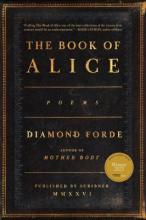
When her grandmother Alice died, poet Diamond Forde inherited a well-worn copy of the KJV Bible to remember her by. Borrowing forms, themes, and characters from its pages, Diamond resurrects her memory in a new sacred The Book of Alice. With rich, surprising language and formal dexterity, these poems retell the story of her life. More than a poetry collection, The Book of Alice is a dialogue with the past, a meditation on the present, and a road map for the future. Essential reading for anyone drawn to the intersections of race, gender, history, and the unyielding power of personal stories.
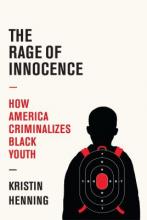
Drawing upon 25 years of experience representing Black youth in Washington D.C.'s juvenile court, Kris Henning confronts America's irrational, manufactured fears of Black youth and makes a powerfully compelling case that the crisis in racist American policing begins with its relationship to Black children. She explains how discriminatory and aggressive policing has socialized a generation of Black teenagers to fear, resent, and resist the police, and details the long-term consequences of racism and trauma Black youth experience at the hands of police and their vigilante surrogates. Especially in the wake of the recent unprecedented, worldwide outrage at racial injustice and inequality, The Rage of Innocence is an essential book for our moment.
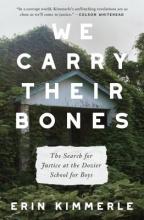
Forensic anthropologist Erin Kimmerle investigates of the notorious Dozier Boys School--the true story behind the Pulitzer Prize-winning novel The Nickel Boys--and the contentious process to exhume the graves of the boys buried there in order to reunite them with their families.
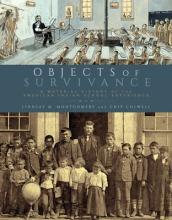
Between 1893 and 1903, Jesse H. Bratley worked in Indian schools across five reservations in the American West. As a teacher Bratley was charged with forcibly assimilating Native Americans through education. Although tasked with eradicating their culture, Bratley became entranced by it—collecting artifacts and taking glass plate photographs to document the Native America he encountered. Today, the Denver Museum of Nature & Science’s Jesse H. Bratley Collection consists of nearly 500 photographs and 1,000 pottery and basketry pieces, beadwork, weapons, toys, musical instruments, and other objects traced to the S’Klallam, Lakota Sioux, Cheyenne, Arapaho, Havasupai, Hopi, and Seminole peoples.
The story of young Black activists at the helm of fighting injustice over the last century, from the 1920s to the Trayvon generation, and how they transformed America and left an indelible mark on history. In Resist, Rita charts the last century of that activism, from the early years of renowned activist Ella Baker, an HBCU student who established critical grassroots organizing networks in the 1920s, and others she inspired, who fought for policy changes in the wake of the unjust trial of the Scottsboro Nine to the first glimpse of allyship in the Bates Seven and a renewed examination of the Black Panthers, all the way to the current generation of young Black revolutionaries who walked American cities in the wake of the murders of countless Black Americans, from Trayvon Martin and Michael Brown to George Floyd.
When Chad Sanders landed his first job in lily-white Silicon Valley, he quickly concluded that to be successful at work meant playing a certain social game. So Chad changed. He changed his wardrobe, his behavior, his speech--everything that connected him with his Black identity. And while he finally felt included, he felt awful. So he decided to give up the charade. And it paid off. Accounting for this turnaround, Chad believes, was something he calls Black Magic, namely resilience, creativity, and confidence forged in his experience navigating America as a Black man. Black Magic explores Black experiences in predominantly white environments and demonstrates the risks of self-betrayal and the value of being yourself.
Black evidence describes the centuries-old tactics used to deny Black truth. Black people were not allowed to testify in court, were lynched to intimidate them, determined to not feel much pain so they could be experimented on, and schoolchildren adultified and arrested for misbehavior. Professor Candis Watts-Smith exposes how Black people are distrusted to accurately describe social and personal experiences, as well as to address the original sins of the United States: slavery, Jim Crow, and structural racism. Smith shows how the sins of the past continue in the present and the cure is to believe Black people, to listen to their voices and their evidence and amplify them.
An unforgettable true story about the potential for mercy to redeem us, and a clarion call to end mass incarceration in America — from one of the most inspiring lawyers of our time. Bryan Stevenson was a young lawyer when he founded the Equal Justice Initiative, a nonprofit law office in Montgomery, Alabama, dedicated to defending the poor, the incarcerated, and the wrongly condemned. Just Mercy tells the story of EJI, from the early days with a small staff facing the nation’s highest death sentencing and execution rates, through a successful campaign to challenge the cruel practice of sentencing children to die in prison, to revolutionary projects designed to confront Americans with our history of racial injustice.
In the summer of 1954, Esau Jenkins and Septima Clark travelled to Tennessee’s Highlander Center, a rural interracial training school for social change. There, they united behind a shared goal of preparing Black southerners to pass the suppressive literacy tests required to vote in the era of Jim Crow. Together with beautician-turned-teacher Bernice Johnson, they launched the effort known as the Citizenship Schools project. By the time the Voting Rights Act was signed into law in 1965, this audacious, grassroots undertaking had grown into a subversive network of nine hundred schools, not only preparing thousands of Black citizens to vote, but creating a generation of activists trained in community organizing, political citizenship, and essential tactics of resistance and struggle.