
One of our favorite genres to share with young readers is nonfiction. There's something to captivate every kid, and there are so many wonderful new titles out this spring. Plus, nonfiction is a great way to expand background knowledge. Place a hold or check one out today!
See all books in this list in our catalog.
More new and coming soon lists:
- New and Coming Soon Picture Books
- New and Coming Soon Books for Developing Readers
- New and Coming Soon Chapter Books
- New and Coming Soon Graphic Novels
Looking for more new books? Try requesting a Personal Reading List and a librarian will send you a list of books tailored just for you!
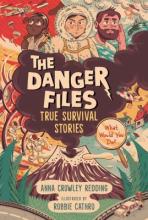
Have you ever wondered what you would do in a life-or-death situation? If survival meant acting quickly, decisively, and correctly, would you have what it takes to avoid catastrophe? In this heart-stopping follow-up to The Danger Files: Real-Life Disasters, investigate some of the most harrowing survival stories in history. Witness the challenges faced on a 1921 expedition into the far reaches of the Arctic north; jump into a raging inferno with the goal of putting out and escaping a wildfire; outrun and outlast the Mount St. Helens eruption; face Hurricane Katrina; and use your wits--and science--to survive on your own in the frigid sea, lost praying for rescue. With access to case files full of critical facts and clues, you'll be challenged to determine for yourself what happened in these true tales and why.
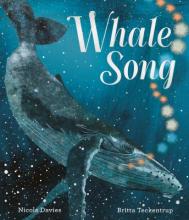
From the ocean's depths to a boat's deck to the spacecraft Voyager, join best-selling author Nicola Davies and award-winning illustrator Britta Teckentrup in celebrating the beauty and power of the humpback whale and its mysterious song.
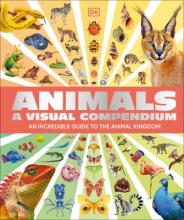
Taxonomic sets, curious collections, and quirky groupings reveal familiar and surprising connections between animals, their bodies, and their behavior - in a glorious visual feast of more than 3,000 images!
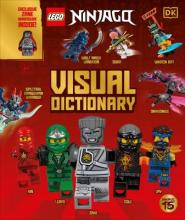
Explore the action-packed world of LEGO NINJAGO in this fully updated Visual Dictionary! Celebrate 15 years of LEGO NINJAGO with the Ninja heroes and their fearsome foes. Meet mighty dragons, explore iconic locations, and see every detail of the most awesome vehicles and mechs. Plus get an inside look at the creation of LEGO NINJAGO, as you meet the LEGO NINJAGO team and uncover exclusive behind-the-scenes facts. Find out everything you need to know in this must-have guide for LEGO NINJAGO fans of all ages!
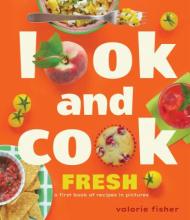
In this fourth title in the popular Look and Cook series, these easy-to-follow and engaging visual recipes will have kids ages 4 to 8 making delicious dishes and snacks using fresh farmers' market produce! Designed for children who can't yet read, Look and Cook Fresh: A First Book of Recipes in Pictures is a must-have introduction to cooking for kids ages 4 to 8.
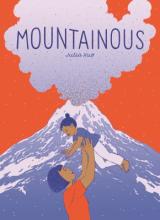
From award-winning author-illustrator Julia Kuo comes a wondrous exploration into mountains. Just imagine ... Trek up, up, up, to where glaciers slide, volcanoes erupt, and meadow flowers burst into color. Discover all of the marvelous ways mountains sway and hum, wiggle and shake, and even make their own weather.
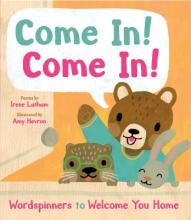
Perfect for fans of A Hole Is to Dig by Ruth Krauss and Maurice Sendak, here is a cozy yet witty collection of short poems about everyday objects that will inspire a love of language in readers ages 3-7. In this inventive collection of poems, author Irene Latham invites readers to take off their shoes and wander around a wide variety of houses, meeting everyday objects with newfound wonder. These short, thoughtful poems are wordspinners--a new poetry form invented by the author that delightfully defines a word by spinning together its sound and function.
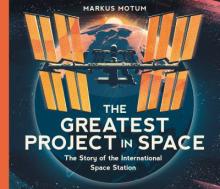
Discover the incredible story of how the world came together to create an orbiting laboratory in space in this absorbing book energized by striking, stylish illustrations.
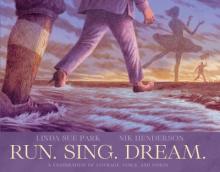
From Rosa Parks to Greta Thunberg, from James Baldwin to Malala Yousafzai, the world has been shaped by those who found the courage to stand, speak, sing, and dream. In Run. Sing. Dream., Newbery Medalist Linda Sue Park brings together a stirring collection of voices--activists, artists, leaders, and visionaries--who refused to be silent in the face of injustice. With spare, poetic text and vibrant illustrations, this inspiring book celebrates the many forms bravery can take: a quiet act of resistance, a powerful song, a determined march, or a single dream carried forward. At once a moving tribute to history's changemakers and a call to action for readers of today, this book invites children everywhere to ask themselves one vital question: What will you do to be brave?
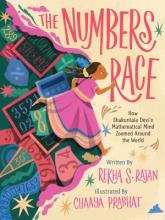
This upbeat and accessible picture book biography makes math fun with the true story of record-breaking Indian mathematician Shakuntala Devi taking on the world's toughest math problems.
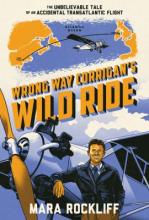
The unbelievable true story of pilot Douglas Corrigan, who took off from New York to fly to California, but landed in Ireland instead.
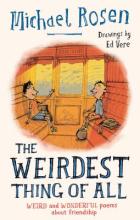
A brand new collection of poetry by former Children's Laureate Michael Rosen, author of We're Going on a Bear Hunt, with illustrations by acclaimed artist Ed Vere.
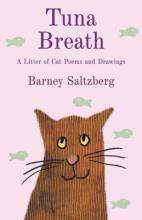
Tuna Breath sends up the many quirks of our favorite self-domesticated overlords, from the things we wish they'd dial down to the reasons we have to love them anyway. Barney Saltzberg's zany-adorable illustrations appear throughout, adding panache to uproarious feline free verse.
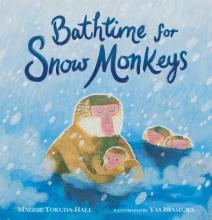
At the Jigokudani monkey park in Nagano, nihonzaru--Japanese macaques--have a unique way of de-stressing from life in a cold climate: gathering in their very own onsen, or hot spring "spa," to lounge and snack. Peek into this magical world in the mountains, hushed by snow, where the macaques reign over their onsen, huddling together. As a playful baby monkey splashes, the others don't want to join in, and as the baby's amusing antics wind down, parents and little ones reading the story will happily snuggle together like the macaques, warm and safe.

A moving portrait of Yuri Kochiyama--an ordinary woman who became an extraordinary activist--and her bond with Malcolm X.