
Risk: the moments when uncertainty meets choice, and the outcome matters. There are lessons drawn from the mountains, where risk is immediate and the stakes are real. How do people evaluate danger, respond under pressure, and decide when to move forward despite uncertainty? A different kind of edge: the emotional and relational risks we take in our everyday lives. What does it mean to trust another person, to choose vulnerability, or to open ourselves to love when the outcome is unknown? How do fear, desire, and uncertainty shape our most human decisions, and why do the risks we take with one another feel just as profound as those taken in extreme environments?
About Curiosity Collective
Step beyond the ordinary with Curiosity Collective, where adults gather for thoughtful conversations in venues across Denver—from bookstores and cafés to bars and cultural spaces. Each event brings together speakers from very different backgrounds to explore a single theme from unexpected perspectives. Talks are short, engaging, and rooted in personal experience or professional insight. After both talks, the audience submits questions, votes on what to explore further, and joins a collective conversation. See upcoming events in our calendar.
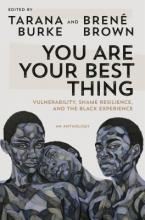
It started as a text between two friends. Tarana Burke, founder of the 'me too.' Movement, texted researcher and writer, Brené Brown, to see if she was free to jump on a call. Brené assumed that Tarana wanted to talk about wallpaper. They had been trading home decorating inspiration boards in their last text conversation so Brené started scrolling to find her latest Pinterest pictures when the phone rang. But it was immediately clear to Brené that the conversation wasn't going to be about wallpaper. Tarana's hello was serious and she hesitated for a bit before saying, "Brené, you know your work affected me so deeply. It's been a huge gift in my life. But as a Black woman, I've sometimes had to feel like I have to contort myself to fit into some of your words. The core of it rings so true for me, but the application has been harder." Brené replied, "I'm so glad we're talking about this. It makes sense to me. Especially in terms of vulnerability. How do you take the armor off in a country where you're not physically or emotionally safe?" Long pause. "That's why I'm calling," said Tarana. "What do you think about a working together on a book about the Black experience with vulnerability and shame resilience?" There was no hesitation. Burke and Brown are the perfect pair to usher in this stark, potent collection of essays on Black shame and healing (and contribute their own introductions to the work). Along with the anthology contributors, they create a space to recognize and process the trauma of white supremacy, a space to be vulnerable and affirm the fullness of Black love and Black life.
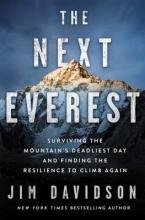
A dramatic account of the deadly avalanche on Everest-and a return to reach the summit. On April 25, 2015, Jim Davidson was climbing Mount Everest when a 7.8-magnitude earthquake released avalanches all around him and his team, destroying their only escape route and trapping them at nearly 20,000 feet. It was the largest earthquake in Nepal in eighty-one years and killed nearly 8,900 people. That day also became the deadliest in the history of Everest, with eighteen people losing their lives on the mountain. After spending two unsettling days stranded on Everest, Davidson's team was rescued by helicopter. The experience left him shaken, and despite his thirty-three years of climbing and serving as an expedition leader, he wasn't sure that he would ever go back. But in the face of risk and uncertainty, he returned in 2017 and finally achieved his dream of reaching the summit. Suspenseful and engrossing, The Next Everest portrays the experience of living through the biggest disaster to ever hit the mountain. Davidson's background in geology and environmental science makes him uniquely qualified to explain why the seismic threats lurking beneath Nepal are even greater today. But this story is not about "conquering" the world's highest peak. Instead, it reveals how embracing change, challenge, and uncertainty prepares anyone to face their next "Everest" in life.
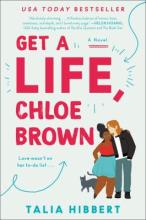
Chloe Brown is a chronically ill computer geek with a goal, a plan, and a list. She's come up with seven directives to help her "Get a Life", and she's already completed the first: finally moving out of her family's mansion. She's ready to enjoy a drunken night out, ride a motorcycle, and other adventures. But it's not easy being bad, and Chloe knows just the man to help her complete her list. Redford 'Red' Morgan is a handyman with tattoos, a motorcycle, and sex appeal, who paints at night but hides his work. When she enlists Red to help her rebel, she discovers what really lies beneath his rough exterior.

Sara has just landed at LAX, returning home from a conference abroad, when agents from the Risk Assessment Administration pull her aside and inform her that she will soon commit a crime. Using data from her dreams, the RAA's algorithm has determined that she is at imminent risk of harming the person she loves most: her husband. For his safety, she must be kept under observation for twenty-one days. The agents transfer Sara to a retention center, where she is held with other dreamers, all of them women trying to prove their innocence from different crimes. With every deviation from the strict and ever-shifting rules of the facility, their stay is extended. Months pass and Sara seems no closer to release. Then one day, a new resident arrives, disrupting the order of the facility and leading Sara on a collision course with the very companies that have deprived her of her freedom.
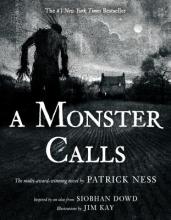
Thirteen-year-old Conor awakens one night to find a monster outside his bedroom window, but not the one from the recurring nightmare that began when his mother became ill--an ancient, wild creature that wants him to face truth and loss.
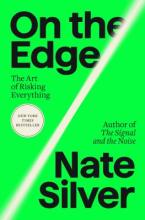
From the New York Times bestselling author of The Signal and the Noise, the definitive guide to our era of risk-and the players raising the stakes In the bestselling The Signal and the Noise, Nate Silver showed how forecasting would define the age of Big Data. Now, in this timely and riveting new book, Silver investigates "The River," or those whose mastery of risk allows them to shape-and dominate-so much of modern life. These professional risk takers-poker players and hedge fund managers, crypto true-believers and blue-chip art collectors-can teach us much about navigating the uncertainty of the 21st century. By embedding within the worlds of Doyle Brunson, Peter Thiel, Sam Bankman-Fried, Sam Altman, and many others, Silver offers insight into a range of issues that affect us all, from the frontiers of finance to the future of AI. The River has increasing amounts of wealth and power in our society, and understanding their mindset-including the flaws in their thinking-is key to understanding what drives technology and the global economy today. There are certain commonalities in this otherwise diverse group: high tolerance for risk; appreciation of uncertainty; affinity for numbers; skill at de-coupling; self-reliance and a distrust of the conventional wisdom. For the River, complexity is baked in, and the work is how to navigate it, without going beyond the pale. Taking us behind-the-scenes from casinos to venture capital firms to the FTX inner sanctum to meetings of the effective altruism movement, On the Edge is a deeply-reported, all-access journey into a hidden world of powerbrokers and risk takers.
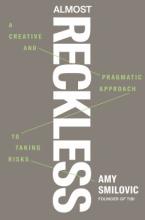
Almost Reckless lays out a framework to help you live according to your own principles--while always remaining grounded in reality. I share how I learned to define my principles and build my own measuring stick for success. I hope this book empowers you to follow your own gut and live the life that's best. For you.
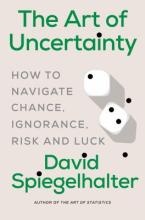
In lucid, lively prose, Spiegelhalter guides us through the principles of probability, illustrating how they can help us think more analytically about everything from medical advice to sports to climate change forecasts. He demonstrates how taking a mathematical approach to phenomena we might otherwise attribute to fate or luck can help us sort hidden patterns from mere coincidences, better evaluate cause and effect, and predict what's likely to happen in the future. Along the way, we learn how a misinterpretation of a probability contributed to the infamous Bay of Pigs fiasco, why a ship twice the size of the Titanic sank without a trace, and why we can be so confident that no two properly shuffled decks of cards have ever been in the same order.Sparkling with wit and fascinating real-world examples, this is an essential guide to navigating uncertainty while also retaining the humility to admit what we don't, or simply cannot, know.
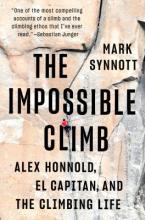
One slip, one false move, one missed toehold, and you're dead. Alex Honnold, the #1 free solo climber in the world, chose the route known as Freerider on Yosemite's El Capitan, a series of pitches so hard that it's newsworthy when someone free climbs it with a rope. No one had ever 'free soloed' it before; only a few people have ever even contemplated it. That four-hour climb on June 3, 2017, was, simply, one of the boldest feats in human history. At the same time, it was almost unbearable to watch--as Mark Synnott did.
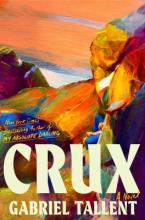
In this story of intense friendship and grit, two down-and-out teens escape the hopelessness of their lives and chase a different future through rock climbing.