
Are you waiting on hold for one of this month's buzziest books? See our list of read alikes to explore similar stories while you wait. This month's buzzy books features some recent award nominations and winners.
Switzy by Emma Cline
The Disappearers by Marlon James
London Falling: A Mysterious Death in a Gilded City and a Family's Search for Truth by Patrick Radden Keefe
Taiwan Travelogue by Yáng Shuāng-zǐ
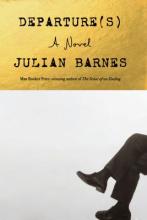
Shortly after our narrator, a writer named Julian, begins this compact book by discussing the workings of involuntary memory, he interrupts himself with a bulletin to the reader: 'There will be a story--or a story within the story--but not just yet.' Of course, whether Departure(s) is mostly fiction or not, there is a lot of its author in it, including Barnes's reckoning with the blood disorder he has been living with since he was diagnosed in 2020, his long preoccupation with dying and grief, and his mordant sense of the indignities and lost opportunities we're prey to in love. The story he promises to deliver is a love story, that of two friends he met at university in the 1960s, that time of touted but rarely experienced sexual freedom. Julian played matchmaker to Stephen (tall, gangling, uncertain) and Jean (tart and attractive); as the third wheel he was deeply invested in the success of their love and insulted when they broke up. Time is swift, and forty years later, he tries again, watching as their rekindled affair produces joys, betrayals, and disappointments of a different order.

Bob Comet is a retired librarian, isolated but not lonely, living out his quiet days in a mint-colored house in Oregon, surrounded by his books and small comforts. One morning, out on his daily walk, he performs an act of kindness that brings him into contact with a nearby senior center, where he soon begins volunteering. Here, as a community of peers and friends gathers around Bob, and following a happenstance brush with a painful complication from his past, the events of his life and the details of his character are revealed. Behind Bob Comet's plain facade is the story of an unhappy child's runaway adventure, of true love found and stolen away, of the purpose and pride found in vocation, and the ultimate acceptance of a life lived to the side of the masses. The Librarianist is a wide-ranging and ambitious homage to the life lived through and for literature. With his inimitable verve, skewed humor, and compassion for the outcast, deWitt celebrates the extraordinary in the so-called ordinary life, and depicts beautifully the turbulence that sometimes exists beneath a surface of serenity.
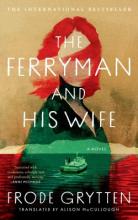
Nils Vik wakes up on November the 18th and knows it will be the day he dies. He follows his morning routine as voices from his past echo in his mind, and looks around the empty house one last time, before stepping onto his beloved boat. His dog, dead these many years, leaps aboard with him, and then the other dead begin to emerge--from the woods along the fjord, from each of the ferry stops along the route, from his logbook full of memories and quotations and jotted-down notes about the weather conditions. The people from the past accompany him now, prodding him, showing him what he might have missed before, as he waits for his Marta, his late, remarkable wife, to finally join him on the boat again.
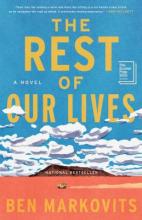
When Tom Layward's wife had an affair twelve years ago, he resolved to leave her as soon as his youngest child left the nest. Now, while driving his college-bound daughter to Pittsburgh, he remembers his promise to himself. He is also on the run from his own health issues and a forced leave from work. So, rather than returning to his wife in Westchester, Tom keeps driving west, with the vague plan of visiting people from his past -- an old college friend, his ex-girlfriend, his brother, his son -- en route, maybe, to California. He's moving towards a future he hasn't even envisioned yet while he considers his past and the choices he's made that have brought him to this particular present.
The Disappearers by Marlon James
The Disappearers is on the National Book Award longlist, the Booker Prize shortlist, and was called "the novel of the decade, if not the century" by the New York Times. These read alikes feature queer coming of age amidst homophobia and the cruelties inflicted on those who go against societal norms.
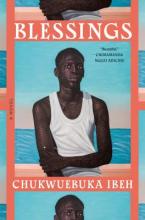
Moonlight meets Purple Hibiscus in this gay coming-of-age novel from an astonishing young talent, set in post-military Nigeria and culminating in the Same-Sex Marriage Prohibition Act of 2014. Obiefuna has always been the black sheep of his family-sensitive where his father, Anozie, is pragmatic, a dancer where his brother, Ekene, is a natural athlete. But when an intimate connection blossoms between Obiefuna and a boy from a nearby village, happiness is fleeting once his father catches them together and banishes him to boarding school. Obiefuna finds and hides who he truly is as he navigates his new school's strict hierarchy and unpredictable violence. Back home, his mother Uzoamaka must contend with the absence of her beloved son, her husband's cryptic reasons for sending him away, and the hard truths that they've all been hiding from. As Nigeria teeters on the brink of criminalizing same-sex relationships, Obiefuna's life, or the life he wants to live, becomes even further out of a reach and more dangerous than ever before. Told from the alternating perspectives of Obiefuna and Uzoamaka, Blessings is an elegant and exquisitely moving story that asks how to live freely in a country that forbids one's truest self, and the love that can flourish in spite of it all.
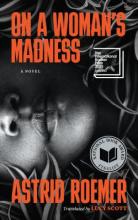
A classic of queer literature that’s as electrifying today as it was when it originally appeared in 1982, On a Woman’s Madness tells the story of Noenka, a courageous Black woman trying to live a life of her choosing. When her abusive husband of just nine days refuses her request for divorce, Noenka flees her hometown in Suriname, on South America's tropical northeastern coast, for the capital city of Paramaribo. Unsettled and unsupported, her life in this new place is illuminated by the passionate romances of the present but haunted by society’s expectations and her ancestral past.
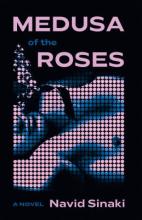
Sex, vengeance, and betrayal in modern day Tehran-Navid Sinaki's bold and cinematic debut is a queer literary noir following Anjir, a morbid romantic and petty thief whose boyfriend disappears just as they're planning to leave their hometown for good. Anjir and Zal are childhood best friends turned adults in love. The only problem is they live in Iran, where being openly gay is criminalized, and the government's apparent acceptance of trans people requires them to surgically transition and pass as cis straight people. When Zal is brutally attacked after being seen with another man in public, despite the betrayal, Anjir becomes even more determined to carry out their longstanding plan: Anjir, who's always identified with the mythical gender-changing Tiresias, will become a woman, and they'll move to a new town for a fresh start as husband and wife. Then Zal vanishes. Stalking and stealing his way through the streets, clubs, library stacks, hotel rooms, and museum halls of Tehran, Anjir's morals and gender identity are pushed to new places in the pursuit of Zal, peace, and self-determination. Steeped in ancient Persian and Greek myths, and brimming with poetic vulnerability, subversive bite, and noirish grit, Medusa of the Roses is a page-turning wallop of a story from a bright new literary talent.
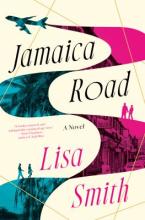
South London, 1981. Daphne is the only Black girl in her class. All she wants is to keep her head down, preferably in a book. The easiest way to survive is to go unnoticed. Daphne's attempts at invisibility are upended when a boy named Connie Small arrives from Jamaica. Connie is the opposite of small in every way: lanky, outgoing, and unapologetically himself. Daphne tries to keep her distance, but Connie is magnetic, and they form an intense bond. As they navigate growing up in a volatile, rapidly changing city, their families become close, and their friendship begins to shift into something more complicated. When Connie reveals that he and his mother 'nuh land'--meaning they're in England illegally--Daphne realizes that she is dangerously entangled in Connie's fragile home life. Soon, long-buried secrets in both families threaten to tear them apart permanently.
London Falling: A Mysterious Death in a Gilded City and a Family's Search for Truth by Patrick Radden Keefe
London Falling was a finalist in non-fiction for the Kirkus Prize. These read alikes explore true crime narratives about the dangers of impersonation and corruption and the journey towards closure when undercovering the circumstances of tragic death.
Looking for even more true crime books? Check out the True Crime: Adult Core Collection list.
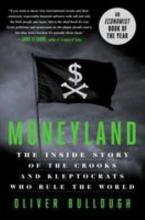
From ruined towns on the edge of Siberia, to Bond-villain lairs in London and Manhattan, something has gone wrong. Kleptocracies, governments run by corrupt leaders that prosper at the expense of their people, are on the rise. Join the investigative journalist Oliver Bullough on a journey into Moneyland--the secret country of the lawless, stateless superrich. Learn how the institutions of Europe and the United States have become money-laundering operations, attacking the foundations of many of the world's most stable countries. Meet the kleptocrats. Meet their awful children. And find out how heroic activists around the world are fighting back.
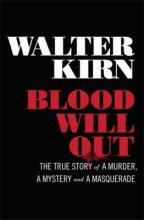
The true story of a young novelist who meets and befriends an eccentric, privileged New Yorker when he delivers a crippled hunting dog to him from an animal shelter, and later discovers that his friend was a serial imposter and brutal double-murderer.
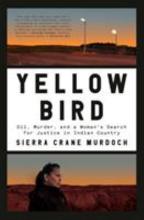
When Lissa Yellow Bird was released from prison in 2009, she found her home, the Fort Berthold Indian Reservation in North Dakota, transformed by the Bakken oil boom. In her absence, the landscape had been altered beyond recognition, her tribal government swayed by corporate interests, and her community burdened by a surge in violence and addiction. Three years later, when Lissa learned that a young white oil worker, Kristopher 'KC' Clarke, had disappeared from his reservation worksite, she became particularly concerned. No one knew where Clarke had gone, and no one but his mother was actively looking for him. Unfolding like a gritty mystery, Yellow Bird traces Lissa's steps as she obsessively hunts for clues to Clarke's disappearance. She navigates two worlds -- that of her own tribe, changed by its newfound wealth, and that of the non-Native oil workers, down on their luck, who have come to find work on the heels of the economic recession. Her pursuit becomes an effort at redemption -- an atonement for her own crimes and a reckoning with generations of trauma. Yellow Bird is both an exquisitely written, masterfully reported story about a search for justice and a remarkable portrait of a complex woman who is smart, funny, eloquent, compassionate, and -- when it serves her cause -- manipulative. Ultimately, it is a deep examination of the legacy of systematic violence inflicted on a tribal nation and a tale of extraordinary healing.
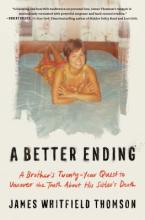
For fans of We Keep the Dead Close and The Night of the Gun, a ... memoir about a brother's decades-long investigation into the circumstances surrounding his sister's tragic death and his own journey to forgiveness and closure.
Taiwan Travelogue by Yáng Shuāng-zǐ
Taiwan Travelogue, translated from the Mandarin Chinese by Lin King, won both the International Booker Prize and the National Book Award for Translated Literature. These read metafiction alikes blur fiction and reality as they grapple with translation, social customs, and the art of translation.
People Like Us is not memoir, yet it has deeply personal connections to Jason’s life. And while rooted in reality, it explodes with dreamlike experiences that pull a reader in and don’t let go, from the ability to time travel to sightings of sea monsters and peacocks, and feelings of love and memory so real they hurt. In People Like Us, two Black writers are trying to find peace and belonging in a world that is riven with gun violence. One is on a global book tour after a big prize win; the other is set to give a speech at a school that has suffered a shooting. And as their two storylines merge, truths and antics abound in equal characters drink booze out of an award trophy; menaces lurk in the shadows; tiny French cars putter around the countryside; handguns seem to hover in the air; and dreams endure against all odds.
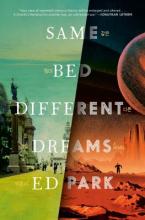
March 1919. Far-flung Korean patriots establish the Korean Provisional Government to protest the Japanese occupation of their country. This government-in-exile proves mostly symbolic, its petitions ignored by heads of state as Korea's nationhood is erased. After Japan's defeat in World War II, the KPG dissolves and civil war erupts, resulting in the North-South split that remains today. But what if the KPG still existed now, today-working toward a unified Korea, secretly harnessing the might of a giant tech company to further its aims? That's the outrageous premise of Same Bed Different Dreams, which spins Korean history, American pop culture, and our tech-fraught lives into an extraordinary and unforgettable novel. Weaving together three distinct narrative voices, Park twists reality like a kaleidoscope, forging connections and reinterpreting the past. Early on we meet Soon Sheen, who works at the sprawling international technology company GLOAT, and comes into possession of an unfinished book authored by the KPG. The manuscript is a mysterious, revisionist history, tying famous names and obscure bit players to the KPG's grand project. This strange manuscript links together figures from architect-poet Yi Sang to Jack London to Marilyn Monroe. M*A*S*H is in here, too, and the Moonies, and a history of violence extending from the assassination of President McKinley to the Soviet downing of Korean Air Lines Flight 007.
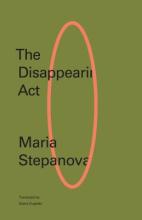
The writer M has lived in the city of B ever since her homeland declared war on a neighboring state. While in exile, she is unable to write and suffers from loneliness, shame, and despair. But then M is invited to give a reading at a literary festival in a nearby country, and after a series of missed connections and mishaps, including losing her phone, she finds herself all alone in the wrong coastal town. She feels a flicker of liberation-the possibility of starting over-but memories of childhood, books, films and tarot cards pull her back, the last fragments of a vanishing world. Then she meets a troupe of circus performers who invite her to join them ... In this brief interlude, severed from reality, it seems as if M may finally escape from herself, from her past, from her nationality. Written in rich and hypnotic prose, The Disappearing Act oscillates between reality and dream, between an oppressive present and a lost past, between life and literature.
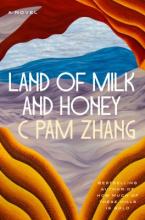
A Chinese American chef, ... lured to a decadent, enigmatic colony of the super-rich in a near future in which food is disappearing, discovers the meaning of pleasure and the ethics of who gets to enjoy it, altering her life and, indirectly, the world.