Metafiction is a literary technique where fiction self-consciously addresses its own artificiality, acting as "fiction about fiction" in which the narrator and/or characters are aware that they are part of a work of fiction. Popularized in postmodernism, it breaks the "fourth wall" to remind readers they are reading a constructed text rather than experiencing reality. Common techniques include the author or characters speaking directly to the reader, stories within stories, and characters aware of their fictionality. Ready to dive in? Here are a handful of titles to start with!
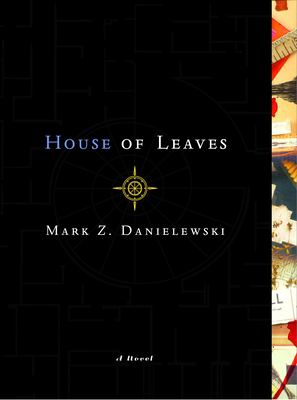
House of Leaves is a complex, experimental horror novel by Mark Z. Danielewski, known for its unconventional structure, footnotes, and unique typography that mirrors the story's themes of madness, perception, and the uncanny. In it, a family relocates to a small house on Ash Tree Lane and discovers that the inside of their new home seems to be without boundaries. The book is famous for its disorienting layout, with text appearing upside down, backward, and in different fonts, creating a maze-like reading experience.
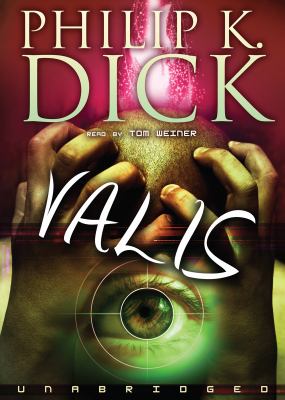
Although Philip K. Dick died in 1982, his work remains influential and his fans are legion. Valis, originally published in 1981, is a theological detective story in which God is both a missing person and the perpetrator of the ultimate crime. The schizophrenic hero, a Dick alter-ego named Horselover Fat, begins receiving revelatory visions through a burst of pink laser light. As a coterie of religious seekers forms to explore these messages, they are led to a rock musician's estate, where a two-year old Messianic figure named Sophia confirms that an ancient, mechanical intelligence orbiting the earth has been guiding their discoveries.
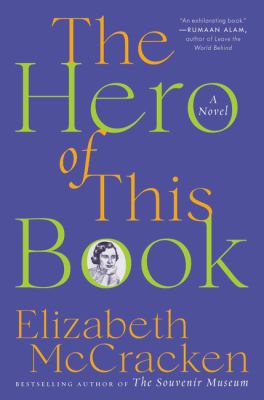
The Hero of This Book by Elizabeth McCracken is a meandering story which digresses timelines and continents, bouncing back throughout the narrator’s upbringing with her parents, a trip she took with her mother – a feisty, confident woman who was born with a debilitating disease that she battled her whole life and denied it the opportunity to win her over – and winds all the way through to 2019, ten months after her mother’s death and into another trip to London where she ponders life, death, and the intimately ordinary existence of her parents.
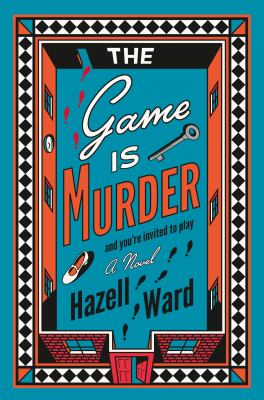
Readers are invited to a very special murder mystery party in Hazell Ward’s The Game is Murder. The game is simple: Listen to the witnesses. Examine the evidence. Solve the case. Be careful. Trust no one. All might not be as it seems. If you agree to play the role of the Great Detective, you must undertake to provide a complete solution to the case. A verdict is not enough. We need to know who did it, how they did it, and why. Are you ready? Can you solve the ultimate murder mystery - and catch a killer? A word of warning: Unsolved mysteries are not permitted…
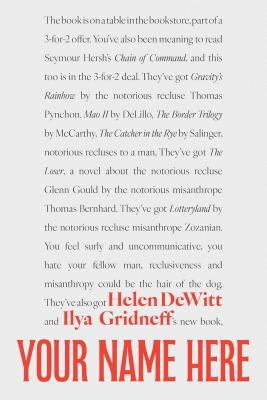
A book of unparalleled scope and vision, Your Name Here is a spectacular honeycomb of books-within-books. In this death-defying feat of ambition, collaborators Helen Dewitt and Ilya Gridneff weave together America’s “War on Terror,” countless years of literary history, authorial sleight of hand, Scientology, dream analysis, multiple languages, emails, images, graphs, into something wondrous and unique.
Check out our list of 50 metafiction titles to keep exploring this fascinating genre!